



Customer communications and payments teams are under pressure to move fast, but speed alone is not the goal. It’s to build a repeatable way to create, deliver, and manage critical omnichannel communications so customers can act with confidence.
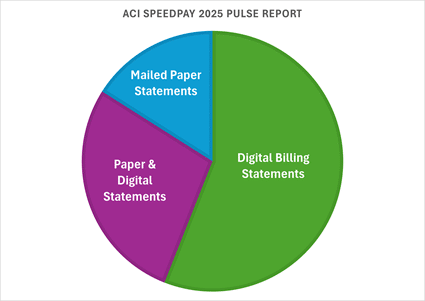
That work is getting harder as expectations keep rising. PwC’s 2025 Customer Experience Survey found that 70% of executives say customer expectations are evolving faster than their company can adapt. ACI Speedpay Pulse found that 57% of consumers prefer digital billing statements and 28% want both paper and digital options while 16% still want print and mail. ACI further reports that nearly 3 in 10 consumers made an urgent or same-day bill payment in the past year, raising the stakes on timing and clarity in payment-related communications.
The good news is that this does not require a complete reset. A stronger approach to omnichannel communications starts with a few disciplined choices. The following dos and don’ts highlight where to focus first in your transactional communications.
1. Do: Use an omnichannel communication platform to streamline content creation and delivery.
Execution is much harder when print and digital communications are managed in separate systems. An omnichannel communication platform gives teams a central way to create templates, make content changes, and deliver communications for print and mail, email and text communications without rebuilding the same message multiple times.
This matters in day-to-day work. Teams need to update language quickly, adjust layouts, apply branding changes, and keep communications consistent across mail, email, and text. A strong customer communication management (CCM) platform also supports personalization based on customer preferences, so delivery aligns with how each customer wants to receive critical communications.
The most effective platforms integrate digital delivery with print and mail operations into a single workflow. That makes it easier to manage change, maintain consistency and security, and reduce delays from development to distribution and receipt.
2. Do: Switch thinking from documents to digital communication records.
One of the most useful mindset shifts is moving from documents to Digital Communication Records™, or DCR™. Instead of treating each message as a separate file, treat the communication as a record built from customer-specific data and business rules that can be rendered in different formats when needed.
This matters because omnichannel communication becomes more difficult when each channel version is treated as a separate asset. Teams end up recreating content, reconciling differences, and managing version control rather than improving the customer experience.
DCRs change that by making the record the source of truth and supporting consistency across channels. It also makes tracking, reporting, and archiving more reliable. This isn’t a technology concept; it’s a practical operating model.
3. Do: Identify customer-critical communications and payment moments
Begin by defining the times communications matter most in the customer journey and how they affect the business. This keeps the strategy focused on outcomes.
A payment reminder has a different job than a service alert. A security notice needs a different trust signal than a confirmation receipt. When all of these are treated as one generic communications stream, effectiveness plummets.
For each message type, document the required customer action, the response window, and the level of proof of delivery or auditability required. That step makes the rest of the strategy easier to design and measure.
4. Don’t: Let subpar design reduce response.
Even when the timing is right, weak design and unclear messaging will lower response rates. Customers should know what the communication is about, why it was sent, what to do next, and when action is due.
Plain language is key. Recognizable sender identity and consistent branding help. Secure links and payment paths that are easy to verify are vital.
- Ensure the copy is understandable and free of jargon and complicated terminology.
- Avoid crowded layouts and competing messages.
- Use white space to separate key information.
- Use color to highlight items such as amount due, due date, or next-step actions.
- Keep formatting consistent across recurring communications.
- Use personalization for relevance, not just a name field.
- In print, use QR codes to provide secure, direct links to payment portals and to highlight additional information or offers.
Customer-centric design is not about aesthetics but rather making communications easier to act on.
5. Do: Define timings before the first message is sent.
Operating discipline deserves a starring role because a strategy becomes real when the next step is defined before the first message goes out.
For each critical communication type, set rules for the primary channel, fallback channel, retry timing, and escalation trigger. Then define success. In one case, success may be a completed payment. In another, it may be a confirmation viewed or a preference updated.
The point is to remove guesswork. If a reminder is delivered but not opened, the follow-up should already be defined. If a due date passes with no action, the next message shouldn’t depend on manual decisions. When those rules are defined in advance, teams move faster and results stay more consistent.
6. Do: Build security and compliance into the workflow.
A final review is too late for issues that should be controlled upstream. A strong platform helps enforce consistent controls across print and digital communications, including approvals, permissions, retention, audit trails, and secure delivery, thereby enabling more uniform governance. Rules mapped to applicable requirements such as HIPAA, Regulation F/FDCPA, and state-specific debt collection and privacy rules make it easier to maintain compliance readiness while continuing to deliver critical communications on time.
7. Don’t: Measure only sends, opens, and clicks.
Fundamental metrics are tied to customer action and payments, not just channel activity. Track reminder-to-payment conversion, on-time payment rate, days to pay, failed-payment recovery, and confirmation delivery success. Review reasons for communication-related customer service calls and undeliverable trends to see where friction is building.
Performance should be reviewed by communication type and stage as well as by channel, for a clearer picture of what improves response and what slows customers down.
The opportunity is not simply to send faster or send more. It is to create a disciplined system to make critical communications more consistent, actionable, and reliable across everyday execution. That is what improves response, supports payment performance, and strengthens trust over time.
Nordis Technologies is an innovator and leader in technology solutions that improve customer communications management and payments. Please contact us to learn how to elevate your CCM strategy.
Key Takeaways:
- Consolidating to a single omnichannel communication platform allows companies to execute an effective omnichannel strategy, moving from one-off documents to digital communication records and building design, compliance, and delivery controls into the workflow.
- What separates strong customer communication performers is not volume, but making communications clear and easier for customers to act on.
- Not only does this approach reduce rework and improve results, it’s how customer communications become a measurable driver of response, payment performance, and customer trust.