

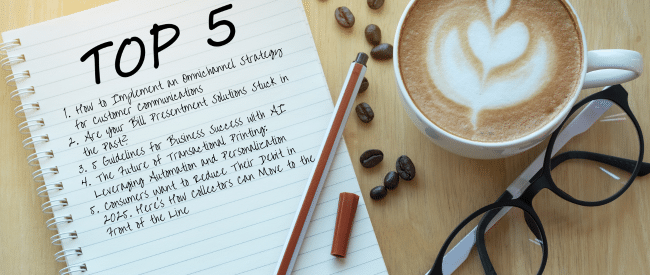
As we close out 2025, we’re looking back at Nordis Technologies’ blog posts that resonated with the most readers. They sparked consideration, conversations and action. From modernizing customer communications, improving billing and presentment experiences, and using technology (including AI) to reduce friction and drive better outcomes, these blogs reflect the themes that mattered most to customer communications and payments teams this year.
- How to Implement an Omnichannel Strategy for Customer Communications
Omnichannel works best for companies and their customers when it’s consolidated, not stitched together from disconnected vendors. This blog makes the case for a secure, cloud-based CCM platform that centralizes templates, rules, approvals and delivery across print, email, and text so experiences stay consistent and personalized. It connects omnichannel strategy directly to outcomes—lower inbound call volume, better satisfaction, and faster payments. The takeaway: Winning programs focus on customer choice and operational discipline while integrating payments and self-service to remove friction. - Are Your Bill Presentment Solutions Stuck in the Past?
Bill presentment is a CX moment, not a back-office step. This blog positions bill presentment as a make-or-break moment between transaction and payment, one that directly affects customer calls, cash flow and loyalty. It explains how legacy presentment falls short in a world where customers expect digital and mobile options, clear statements and connected experiences. Then it lays out what modern looks like: Customer communications management and electronic bill presentment and payments systems working together to deliver choice, convenience, ease of use and seamless end-to-end journeys. Pro tip: It also advises automating a print fallback when digital goes unopened. - 5 Guidelines for Business Success with AI
AI can be a competitive advantage, but the key is treating AI as a tool, not a strategy. Without a disciplined approach, rushing ahead with AI can waste resources and damage trust internally and with customers. Instead, these five guidelines build a practical path forward, starting with anchoring AI in business goals and prioritizing use cases that improve clarity, lift work, or reduce friction. Then, companies should customize and securely host LLMs with a company/industry context layer. Adopting a fast-fail approach with short evaluation cycles and a human-in-the-loop to validate outputs can keep companies moving quickly but strategically. Then keep refining and iterating to scale what works. It’s a clear blueprint for ROI-first adoption. - The Future of Transactional Printing: Leveraging Automation and Personalization
Just like other delivery channels for transactional communications, leaders in print production are leveraging technology to get smarter, faster, and more efficient. This blog explains how workflow automation and personalization capabilities, paired with an omnichannel CCM platform, are helping keep print and mail communications a relevant pillar in strategic communications programs. It also spotlights techniques for speeding payments with print-digital hybrids—such as QR codes and personalized URLs on statements—that send customers straight to self-service payment options. It shows how unified templates and analytics across print, email, and text create a continuous feedback loop for better outcomes. - Consumers Want to Reduce Their Debt in 2025. Here’s How Collectors Can Move to the Front of the Line
This blog taps into the still-timely trend in which consumers are prioritizing debt reduction, creating an opening for collectors, if they can earn attention and trust first. As delinquencies rise and collectability worsens, companies can move to the front of the line for payments through personalized, omnichannel outreach and frictionless self-service payments. A standout point is the engagement gap: People want reminder texts and mobile alerts, but few are receiving them, making CCM-driven automation a competitive advantage for recovery and compliance.
Thanks for reading, sharing and engaging with our content throughout the year, both here on our blog and on LinkedIn. We appreciate the conversations, questions, and feedback. And we look forward to keep bringing you practical insights and guidance in 2026.